International Academy of Bionic Science Established in Beijing
At present, bionic science and engineering, as an emerging interdisciplinary field characterized by deep cross-disciplinary integration, has become a key driving force for fundamental scientific innovation and industrial transformation. It has generated a series of breakthroughs in strategic sectors such as aerospace, new energy, and biomedicine. Amid a new wave of global scientific and technological revolution, bionics is urgently called upon to lead frontier developments in artificial intelligence, embodied robotics, and advanced sensing technologies, in response to the accelerating demand for global industrial upgrading. July 26-27, the establishment meeting of the International Academy of Bionic Science (IABS) was held in Beijing, bringing together 20 academicians from China, the United States, Germany, the United Kingdom, Japan, Korea, Singapore, and other countries gathered to witness the establishment of the Academy—the highest academic body and think tank of the International Society of Bionic Engineering (ISBE).
On July 26, the release ceremony of the IABS was chaired by Prof. Zhiwu Han. He reviewed the preparatory process of the IABS: the initiative was first proposed in 2021 by Prof. Ren Luquan; it was approved by vote of the Council of the ISBE in 2023; formally endorsed by the Executive Council of ISBE in 2024; and the inaugural leadership team of the IABS was subsequently elected. The ISBE Fellows consist of 39 distinguished scholars and renowned experts who have made significant contributions to bionics and related fields.
On July 27, the IABS conference was chaired by Prof. Zhihui Zhang. Prof. Luquan Ren, Emeritus Chair of the ISBE and Honorary President of the IABS, delivered a keynote speech entitled “Learning from Nature, Inspiring the Future.” He emphasized that over more than 60 years of vigorous development, bionics has become one of the fastest-growing, most dynamic, and widely applied disciplines. With the continuous enrichment of the concepts of “efficiency, low consumption, green, and sustainability,” bionics has emerged as a guiding paradigm for scientific innovation, economic development, and social progress. Facing the fourth wave of the scientific and technological revolution, marked by the rise of disruptive technologies such as artificial intelligence, robotics, and quantum computing, bionics is encountering both new challenges and tremendous opportunities. The establishment of the IABS is therefore timely, aiming to build broad platforms, foster collective wisdom, and pool scientific and intellectual resources. It aspires to create a model international hub of scholarship and expertise, leading the sustainable and healthy development of bionic science and technology worldwide. As the highest academic body and think tank of the ISBE, the IABS undertakes three core missions: Selecting ISBE Fellows to foster leading talents in bionics; Selecting the International Bionic Science and Technology Award (IBSTA) to promote the high-quality and efficient development of bionics; Establishing a high-level international bionics forum to promote major breakthroughs in international collaboration and academic exchange. He concluded with “Shoulder the mission, the future is promising,” expressing his hope that the IABS would become a flagship for innovation in bionic science and talent development. His words resonated deeply with the audience and were met with sustained applause.
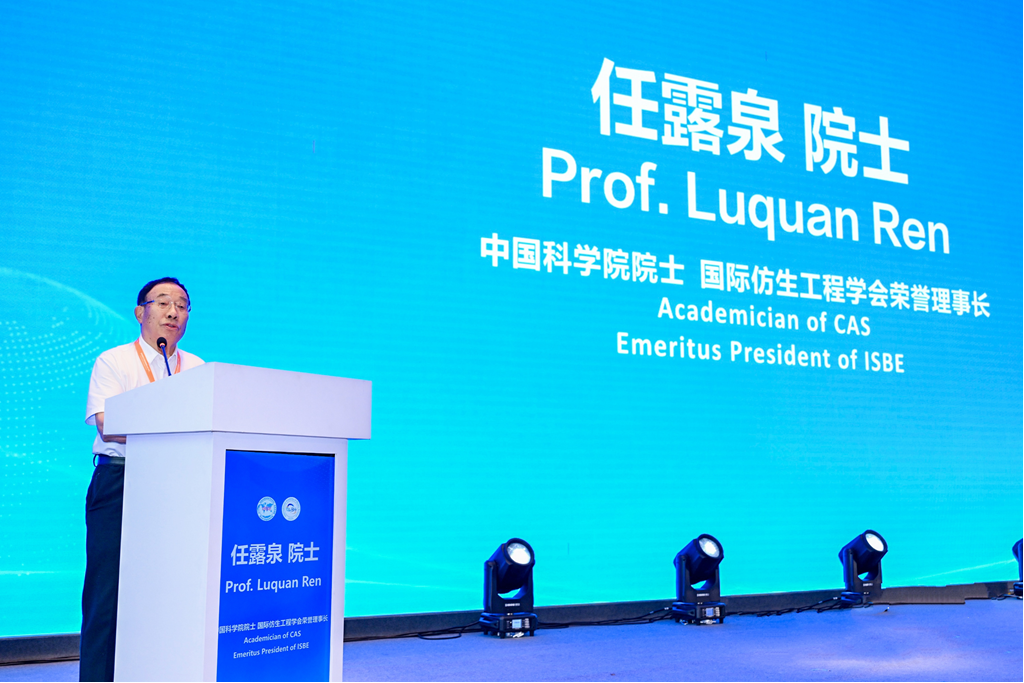
Prof. Ren Luquan, Emeritus Chair of the ISBE and Emeritus President of the IABS, delivered an address.
Prof. Lei Ren, Standing Vice-President of the ISBE, announced the composition of the inaugural Working Committee (leadership team) of the IABS, followed by the granting ceremony of ISBE Fellows.
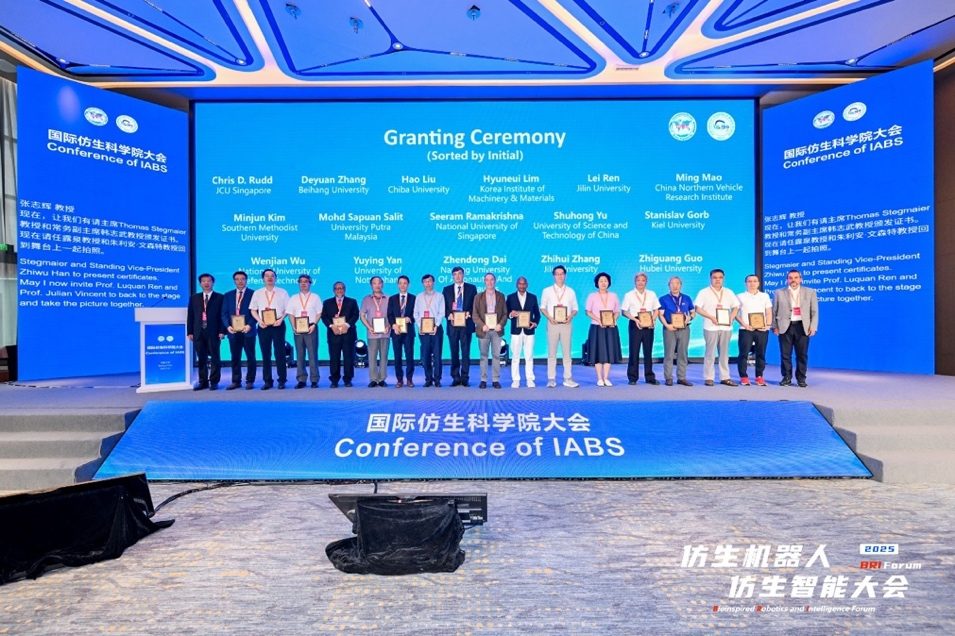
The granting ceremony of ISBE Fellows
During the Academicians’ presentation session, Prof. Stanislav Gorb, Academician of the German Academy of Sciences and ISBE Fellow, in his presentation “Biologically-inspired robotics: what can we learn from biology?” In his presentation, he systematically elaborated on the inspiration that biological evolution offers for the design of intelligent robotic systems. By demonstrating flexible locomotion in mollusks, the micro- and nano-structured adhesive architectures of beetle feet, and the multimodal adhesion mechanisms of geckos, Professor Gorb revealed the universal principle that biological systems achieve complex functions through structurally simple designs. He further emphasized that the fundamental advantage of bionic robotics lies in harnessing the efficiency refined over billions of years of biological evolution to resolve the intrinsic complexity of engineering systems. This theoretical insight provides important solutions and new perspectives for the future design of robotic technologies.
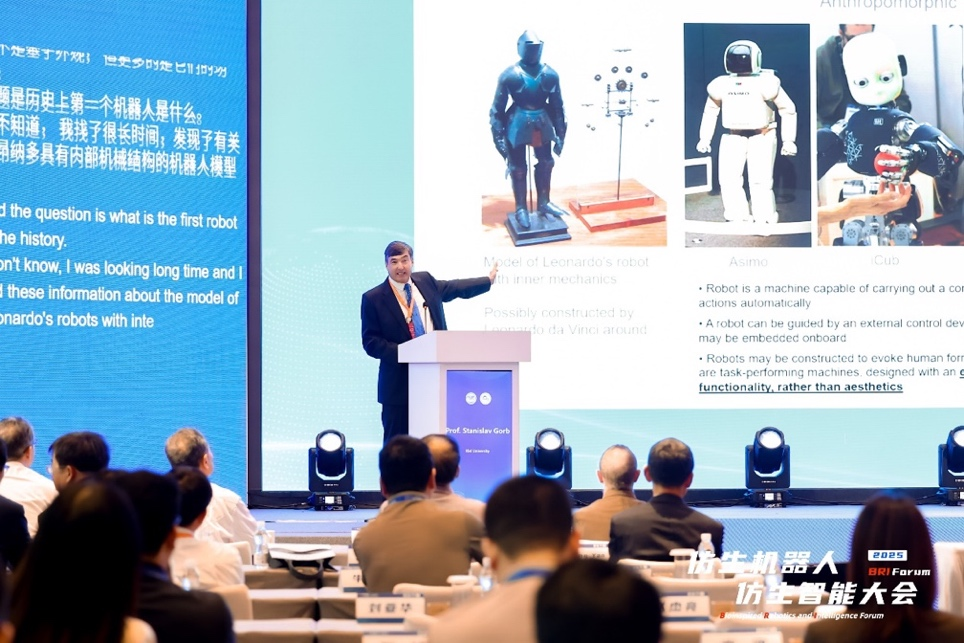
Prof. Stanislav Gorb, Academician of the German Academy of Sciences and ISBE Fellow, delivered an address
Prof. Shuhong Yu, Academician of the Chinese Academy of Sciences and ISBE Fellow, in his presentation “Bio-Inspired Sustainable Structural Materials”. In his presentation, he provided an in-depth analysis of how hierarchical biological assembly mechanisms are reshaping paradigms in materials design. Taking the “brick-and-mortar” topological interlocking structure of nacre as a model, Professor Yu elucidated how nature achieves a dynamic balance between lightweight performance and damage tolerance through cross-scale ordered assembly from the molecular to the micro/nano and macroscopic levels. He further introduced a bio-based manufacturing approach—directional deformation assembly—that enables the scalable production of high-performance sustainable materials with bioinspired structures. In the future, bioinspired sustainable structural material design is expected to be translated into applications across diverse industries. Through multiscale assembly technologies, it will help reconstruct core scenarios within green manufacturing supply chains, driving low-carbon transformation and ultimately realizing the sustainable vision of “empowering humanity through nature.
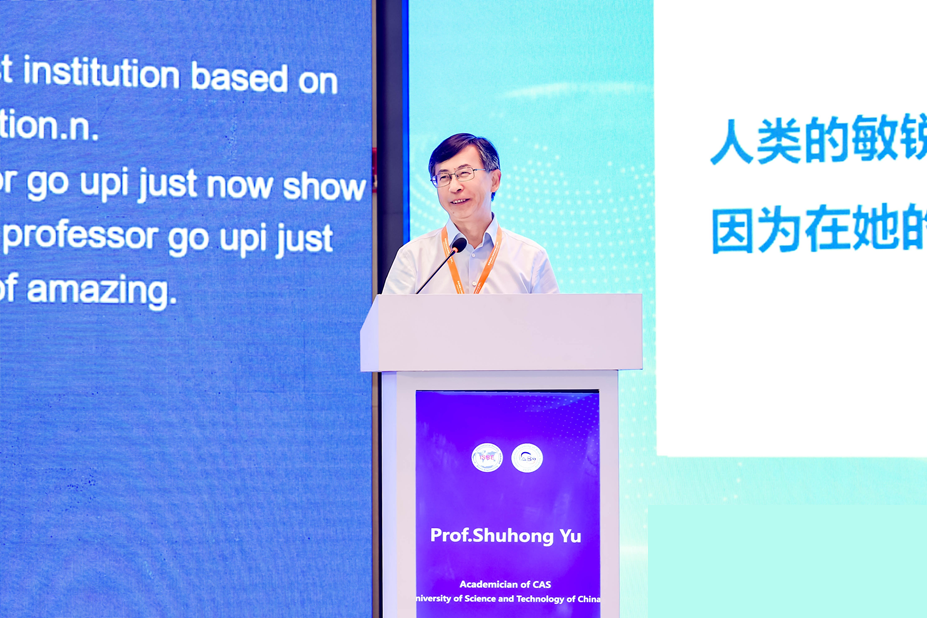
Professor Yu Shuhong, Academician of the Chinese Academy of Sciences and Fellow of the ISBE, delivered an address
At the subsequent Working Meeting of the IABS, the division of responsibilities within the leadership team was formally announced. The meeting, in principle, approved the Selection Guidelines for ISBE Fellows and the Selection Regulations for the IBSTA. Key tasks for the second half of the year were also clarified. The participating Fellows expressed their collective commitment to working together and providing full support to ensure the high-quality and efficient development of the IABS.
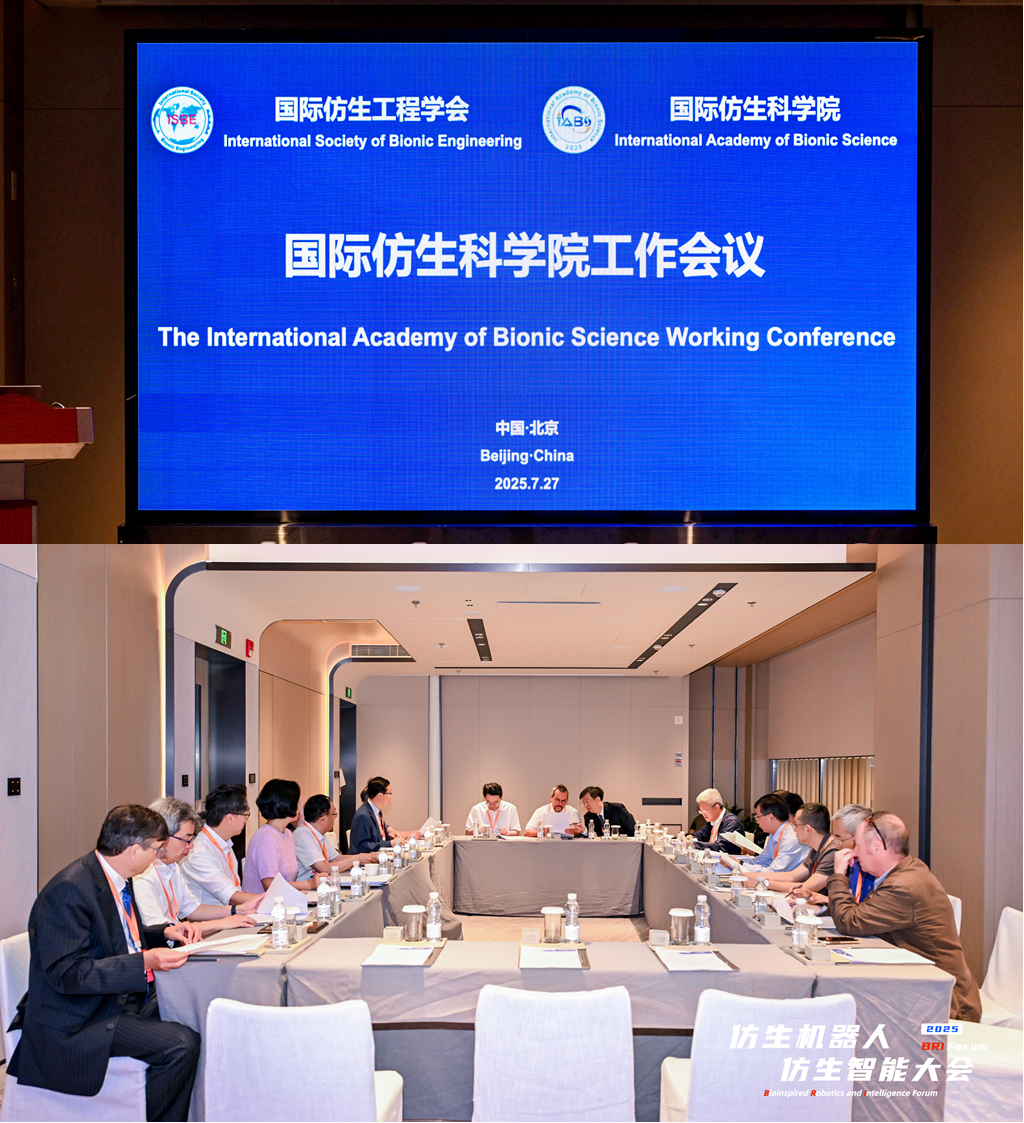
IABS working meeting
As the highest academic body and strategic think tank of the ISBE, the IABS will move forward with determination and continue to grow in strength, striving to achieve new milestones in the global field of bionics. It is committed to injecting sustainable momentum into advanced technological domains worldwide and elevating humanity’s endeavor to seek solutions from nature to new heights.

